Living & storage
Entryway Cabinetry: Plan an Everyday Drop Zone
Plan entryway storage around arrivals and departures, with considered places for coats, bags, shoes and the essentials you need tomorrow.
By NOBU Editorial ·
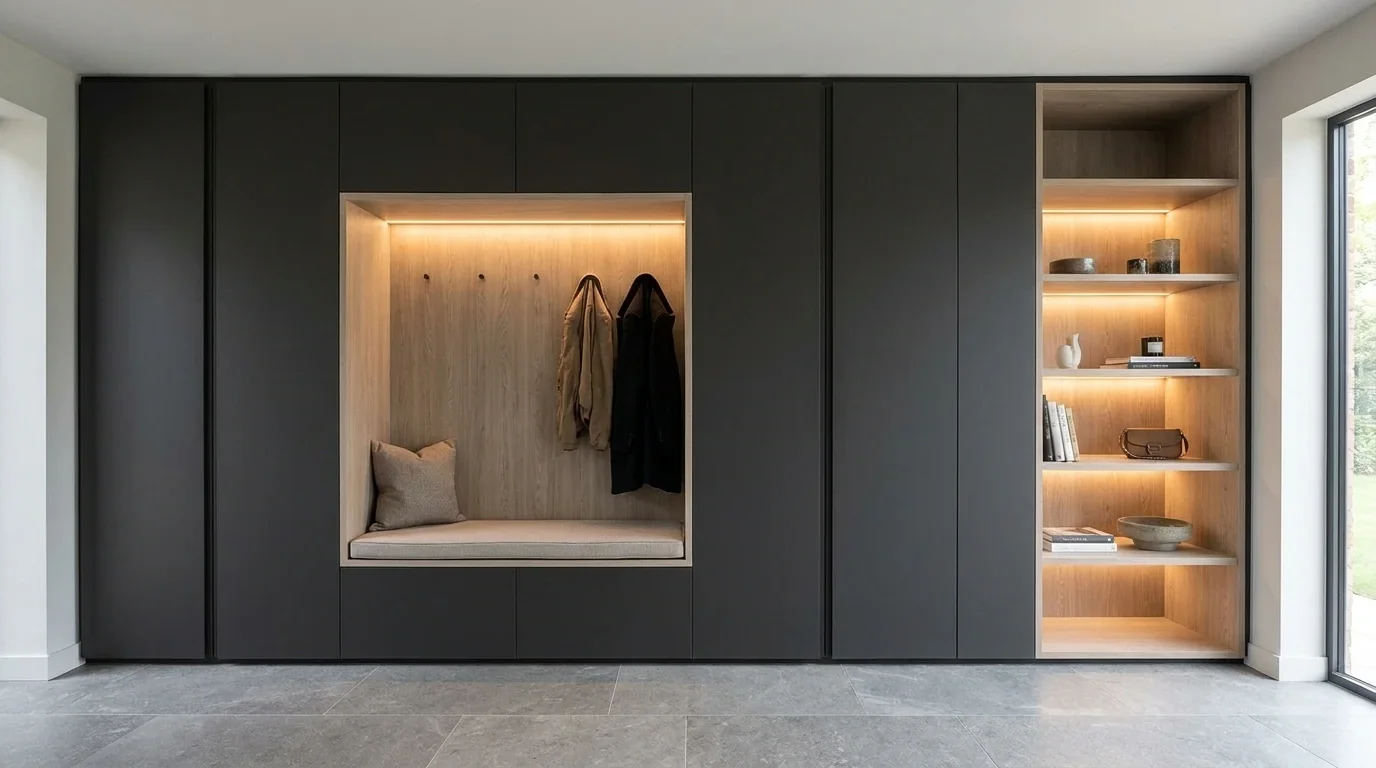
An entryway drop zone works best when it gives everyday belongings a clear place without interrupting the route into the home. Before choosing cabinet finishes, list what arrives through that particular door: keys, shoes, bags, jackets and the items that need to leave again tomorrow. The resulting storage brief should follow those routines rather than an idealized photograph.
A front entrance and a garage entrance may need different arrangements. One might welcome visitors, while the other handles school bags and daily errands. They can share a material language while serving distinct purposes.
Begin with the arrival routine
Walk through an ordinary return home. Where do you put a bag while taking off shoes? Where does a jacket land? What happens to keys when your hands are full? These small observations reveal whether a bench, an accessible shelf, a hanging area or enclosed storage should receive priority.
Also consider departure. An entryway is a useful staging point for tomorrow's essentials, but it should not become the permanent home of everything waiting for a decision. Reserve an intentional place for outgoing items and review what really belongs there.
Pair a landing place with a place to sit
A bench can support the simple task of changing shoes while giving an entrance a welcoming pause. An open niche with hooks may keep frequently used jackets visible. Closed cabinetry around that niche can provide a quieter backdrop for belongings that do not need immediate access.

The pictured design visualization illustrates that relationship between a seating niche, coat hooks and surrounding fronts. It does not establish the internal arrangement of the closed cabinets. Specify those interiors separately, using the household's actual belongings as the starting point.
Try the proposed layout with the people who will use it. A visually balanced elevation is not enough if reaching a hook or setting down a bag feels awkward.
Decide what stays visible
Open storage is convenient for items used repeatedly; enclosed storage can reduce visual distraction. Neither approach needs to dominate the entire wall. A useful question is whether an item benefits from being seen or simply needs to be easy to find.
Give keys and small accessories a consistent landing place. Consider where guests can put a coat without borrowing a family member's assigned space. IKEA's hallway guidance similarly addresses extra coat and shoe storage when visitors arrive; that principle can inform a custom cabinetry brief without copying a product arrangement.
Keep circulation part of the design
Review the entryway with cabinet doors open and with someone sitting at the bench. Include nearby room doors, the main entrance and the route used while carrying groceries or luggage. Storage should support that movement rather than consume the space left over after the elevation is drawn.
Ask the responsible design team to check the proposed dimensions, clearances and any applicable requirements for the actual home. Avoid relying on a generic cabinet depth or a photograph to establish what will fit.
Prepare a practical cabinetry brief
- Identify which entrance handles the daily routine.
- List the belongings stored there and who uses them.
- Separate frequent-use items from occasional storage.
- Review seating, hooks and the small-item landing place together.
- Check open doors and occupied seating against circulation.
- Confirm the selected surfaces' care instructions before approval.
NOBU Concept approaches entry and mudroom cabinetry as part of the wider home. A considered drop zone can connect everyday organization with the proportions and materials used elsewhere, while remaining tailored to the activity at the door. The aim is a space that makes arriving and leaving easier to manage.
Source
IKEA USA — Get your hallway ready for guests and all their stuff. Consulted for the practical need to accommodate visitors' coats and shoes; no manufacturer imagery reproduced.
https://www.ikea.com/us/en/rooms/hallway/how-to/get-your-hallway-ready-for-guests-and-all-their-stuff-pxm2adzLio713rBupmtlVKhvX/